
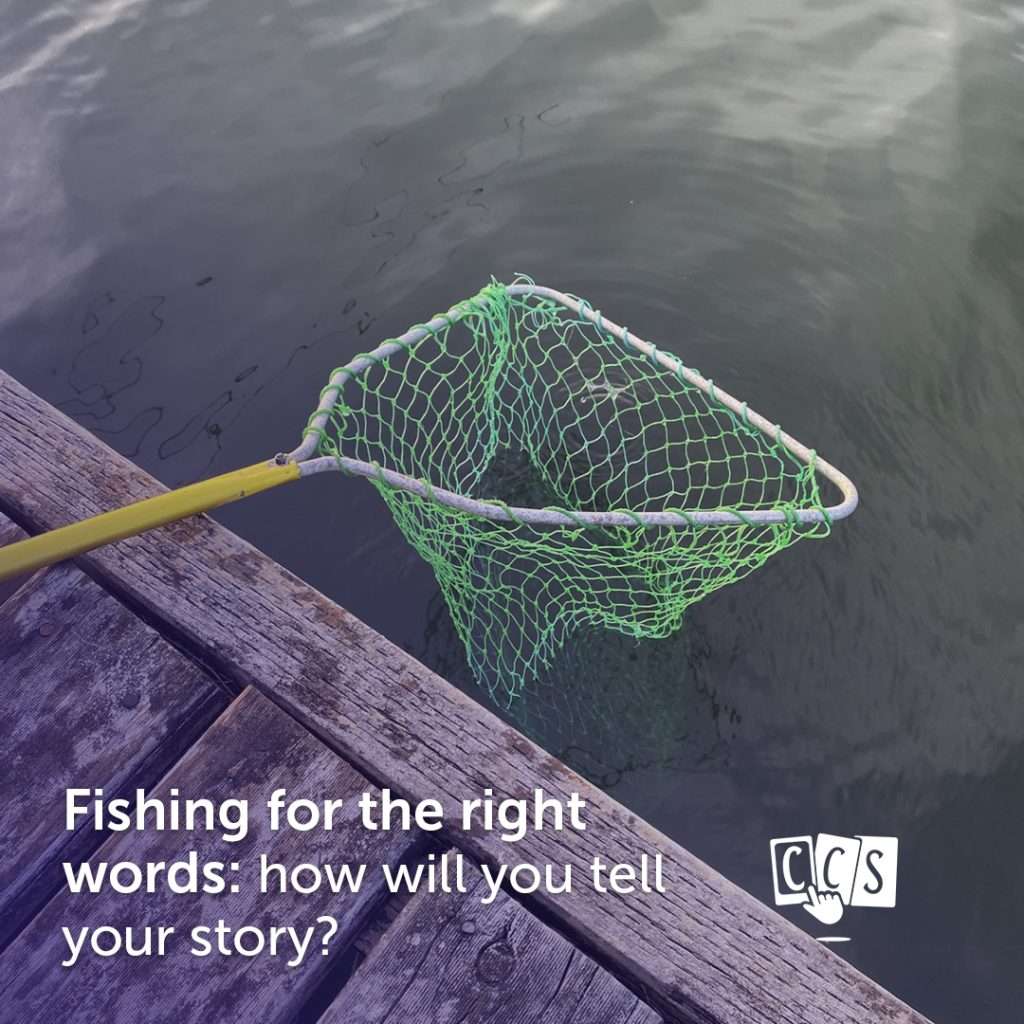
Fishing for the right words to answer the big question
Leonie Cutts
How was your year?
How was your trip?
How’s the new job going?
Ever find yourself scrambling for the right words when someone asks you one of these big questions?
Where do you even begin? What part of your story do you choose to tell?
I’ve been there. In fact, I had one of those moments recently when someone asked me, “How was the wedding?” My mind just flooded with thoughts and feelings.
What story should I share? Do I go with the high-level version, like “It was the most amazing day ever and everything went perfectly,” or do I get into the gritty details, like “It was 38 degrees with 100% humidity, then it stormed at 9 p.m. and everyone left early”?
It’s a classic case of “where do I start?” The flood of memories made it hard to grab onto just one.
I get stuck in this moment every time—trying to figure out what angle will best share the experience, while still feeling true to it.
As a coach and facilitator, I’ve seen this happen with participants too. There’s often a long pause before they start answering, which is sometimes useful as they gather their thoughts. Other times, they dive straight in—talking, talking, and more talking, sometimes making it harder to get to the heart of what they want to say.
That’s where images come in.
Whether you’re the one answering a big question or guiding someone else through it, images can work wonders. They help you (or your participants) focus and reflect before diving into the full story.
Here are two powerful ways I’ve used images to help people respond:
1. Directed Disclosure:
Participants are given a specific image card as a prompt to help them respond to a particular question or topic.
2. Free Choice:
Participants have a set of image cards (the CCS Cards have 53 images, with no set meaning) to sift through and choose the one(s) that resonate most with them in relation to the topic. This allows them to share from a more personal and authentic place.
In both cases, the images serve as a tool to help individuals connect to a specific perspective of their story, making it easier to begin sharing. It gives them a moment of reflection before they open up—so they can decide what part of the story is most important or relevant to share.
As Dr. Stephanie Burns says, “The CCS Cards level the playing field” in communication. For facilitators, they help set the tone, manage the flow of disclosure, and make participants feel more comfortable and empowered to share.
From a simple opening topic such as “introduce yourself to the person next to you” to creating curiosity and tapping lived experience with topics like “describe your experience of great leadership”, the CCS Cards can promote deeper, clearer responses – with more ease.
If you would like learn more and experience using image cards to engage participants online, you can join us for “Beyond Icebreakers: Reimagining Virtual Facilitation Through Image Cards”.

 CCS CARDS